
Why Sectionals Improve Room Flow

Room flow describes how easily you can move through a space, where your eye naturally travels, and how furniture shapes the paths between doorways, seating, and focal points like a TV or fireplace. When flow works well, a room feels intuitive. When it doesn't, you find yourself squeezing past armrests, cutting across conversation zones, or walking in front of the screen every time you head to the kitchen.
A sectional sofa is uniquely suited to improve room flow because it consolidates multiple furniture pieces into one cohesive shape. Instead of arranging a sofa, loveseat, and accent chairs, each creating its own obstacle, a single sectional defines a clear boundary between the seating area and the walkway. This instantly clarifies pathways in any living room, family room, or open plan spaces. Sectionals also enhance interior design by fitting seamlessly into various room layouts and styles, contributing to visual harmony and complementing the overall aesthetic of your home.
This guide covers the practical ways sectionals improve flow: clearer walkways, better sightlines, natural conversation zones, and more efficient use of corners and dead space. By the end, you'll know how to choose and place a sectional that makes your living space feel larger, more organized, and easier to navigate.
What "Room Flow" Really Means in a Living Space
Room flow is the relationship between how people physically move through a room and how the space visually feels. Good flow means you can walk from the front door to the couch, from the couch to the kitchen, and from the kitchen to the hallway without zigzagging around obstacles or brushing against furniture.
For most living rooms, this means keeping primary pathways around 30–36 inches wide and ensuring that traffic doesn't cut directly through conversation or seating areas. The goal is intuitive movement—where the layout guides you naturally rather than forcing awkward detours.
Poor flow feels immediately frustrating:
-
Bumping your shins on a coffee table every time you cross the room
-
Walking in front of the TV during movie nights to reach another part of the house
-
Squeezing sideways between a chair and the wall to get to the balcony door
-
Guests are unsure where to sit because seating is scattered without clear organization
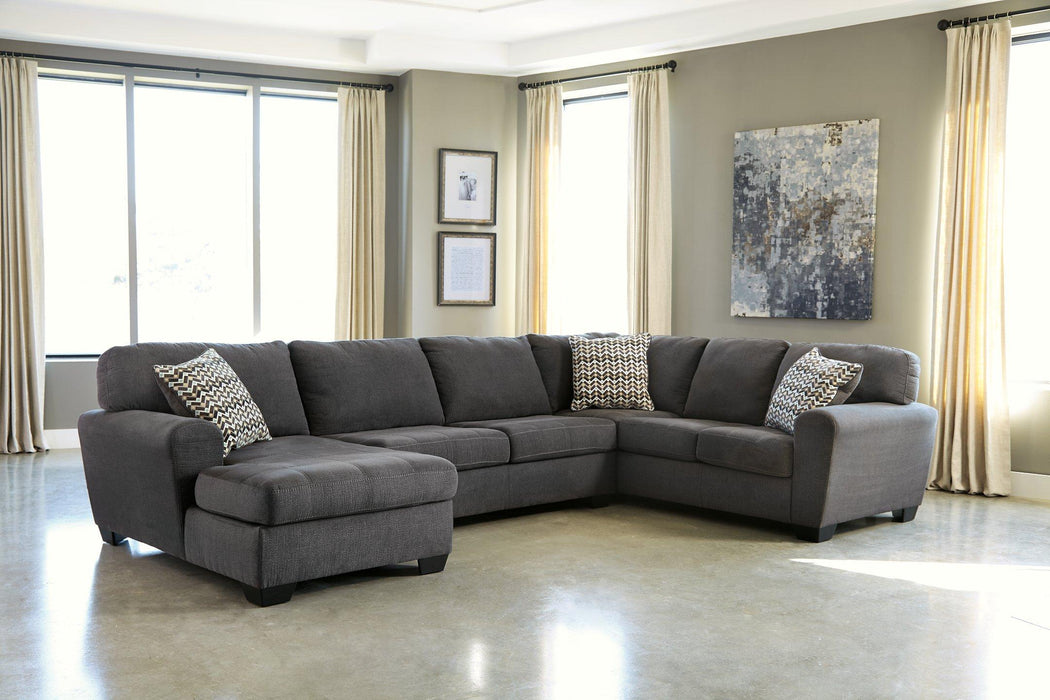
A sectional's continuous shape can solve these problems by guiding traffic around the seating zone instead of through it. Think of a 2024 apartment living room with one doorway and a balcony door on opposite walls. With separate pieces scattered around, people naturally cut through the middle. With an L-shaped sectional positioned thoughtfully, the back of the couch creates a soft boundary that directs movement along the perimeter.
How Sectionals Clarify Pathways and Circulation
Sectionals function like a soft wall, clearly separating walkways from lounge zones without the visual weight of an actual partition. This is especially valuable in living areas where you need to define space without blocking natural light or making the room feel smaller.
Placing an L-shaped sofa so its back faces a hallway or entry naturally directs traffic along the outside edge rather than through the seating cluster. The sectional creates an obvious "inside" (where people sit) and "outside" (where people walk), eliminating the confusion that scattered furniture creates.
Consider a 12' x 16' living room. A standard sofa plus two chairs might create three narrow, awkward routes: one behind the sofa, one between the chairs, and one in front of everything. Replace that arrangement with a compact L-shaped sectional, and you open one wide, obvious path that flows clearly from door to door.
Recommended clearances for sectional placement:
|
Area |
Minimum Clearance |
|---|---|
|
Main walkway |
30–36 inches |
|
Between the sofa and the coffee table |
18 inches |
|
Between the sectional and the wall (if floating) |
8–12 inches |
|
Entry into the seating area |
24–30 inches |
Fewer separate pieces also mean fewer legs and arms, creating trip hazards along circulation paths. One sectional with clean lines replaces the visual clutter of multiple furniture pieces, making the floor space read as more open,n even when seating capacity stays the same.
Using Sectional Shapes to Direct Flow
Different sectional shapes influence movement patterns in distinct ways. An L-shaped couch works differently from U-shaped sectionals or modular sofas, and choosing the right configuration depends on your room shape and where traffic naturally wants to go.
The general principle is simple: position the open side of the sectional toward the natural entry point, and leave a clear path around the outer edge of the seating area. The shape of your sectional determines how much of the room it encloses and how people enter and exit the conversation zone.
L-Shaped Sectionals: Guiding Movement in Rectangular Rooms
An L-shaped sectional works especially well in the 11'–14' wide rectangular living rooms common in homes built after 2000. The configuration creates a natural corner for seating while leaving the rest of the room open for movement.
The most effective placement puts one leg of the "L" along a wall and the other floating to create a boundary between seating and walkway. For example, align the long side under a window and position the shorter side pointing toward the TV, leaving a 3-foot path from the entry to the balcony door.
In open-plan layouts, an L-shaped couch can pull seating away from walls entirely, letting traffic flow behind the sofa instead of in front of the TV. This is particularly useful when the living area shares space with a dining table or kitchen island.
If your shaped sectional includes a chaise lounge, position the chaise away from main doorways so extended legs don’t jut into walkways.
U-Shaped Sectionals: Defining Zones in Open-Plan Spaces
U-shaped sectionals work best in larger rooms (16' x 18' and up) or combined living-dining areas where you need to define a distinct lounge zone within a bigger living space.
The "U" shape faces a focal point; TV, fireplace, or large window, while leaving a clear entrance at one end for people to enter and exit the seating area. In a 2024 open-plan condo with the kitchen behind the sofa, the back of the U defines the living zone while the side arms create a cozy, enclosed conversation area.
A few placement cautions:
-
Avoid pushing all sides of the U against walls, which creates dead ends
-
Leave at least one side open as the "gateway" into the seating pit
-
Ensure enough room behind the back of the U for kitchen-to-hallway traffic
The U shape replaces the need for multiple chairs and side seating, which simplifies pathways and reduces obstacles throughout the room.
Modular Sectionals: Adapting Flow Over Time
Modular sectionals consist of individual pieces, corners, armless seats, and chaises that can be reconfigured as your needs change. This flexibility directly affects room flow because you can widen a circulation path or open a new entry into the seating area without replacing the entire sofa.
Real-life scenarios where modular sofas shine:
-
Rearranging a 5-piece sectional when a baby starts walking and needs more floor space
-
Splitting a modular setup into a main sofa plus a separate chaise to free a narrow passage in a compact room
-
Reconfiguring for family gatherings when you need more seating in one area and a clear path to the dining table
Modular sectionals give you permission to experiment. If traffic flow isn't working, you can swap pieces rather than starting over with entirely new furniture.
Replacing Multiple Pieces with One Cohesive Shape
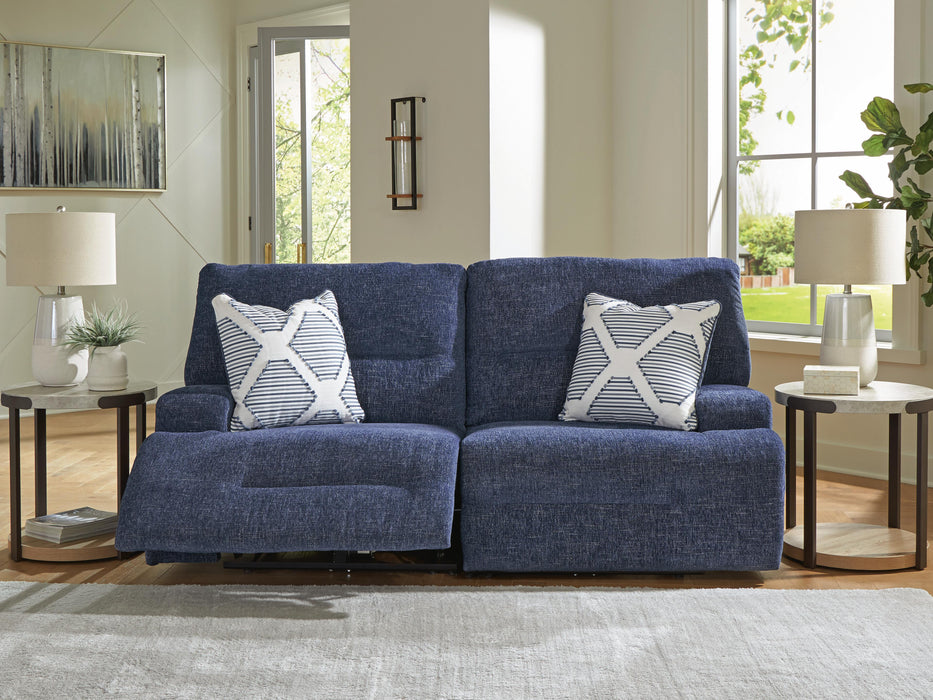
A single sectional can replace a 3-seat sofa, loveseat, and one or two armchairs, fitting seamlessly into a room's layout, eliminating the clutter of separate pieces, and simplifying movement through the room.
Fewer individual furniture pieces mean fewer legs, edges, and arms blocking paths. Consider swapping a traditional setup from the early 2010s (3-seat sofa plus 2 chairs) for a 2-piece L sectional in a 13' x 15' living room. The result is often a clearer central walkway and more usable floor space around the perimeter.
Sectionals also reduce visual clutter by consolidating seating into one large piece, creating a more open appearance.
This consolidation creates more seating without more obstacles:
-
One clear "inside" (seating zone) and "outside" (walkway) to the arrangement
-
Free corners for plants, floor lamps, table lamps, or narrow consoles
-
Easier cleaning, fewer legs to vacuum around
-
A more cohesive visual presence that doesn't fragment the room
Sectionals can provide significantly more seating than a traditional sofa and loveseat combination, making them ideal for entertaining.
The large sofa look of a sectional can actually feel lighter than scattered pieces because it reads as one intentional shape rather than multiple objects competing for attention.
Sectionals as Soft Room Dividers (Without Killing Light)
In studio apartments and open-plan houses built after about 2015, sectionals can function like a half-height wall, subtly dividing zones while leaving upper sightlines open for natural light to pass through.
Floating the back of a sectional toward a kitchen or dining area defines the living area without closing it off. Place the back of the sectional about 8–10 feet from a kitchen island in a 20’-long combined space, with a 3-foot path behind the sofa for circulation.
This arrangement encourages circular flow: in from the entry, around the sectional, past the dining table, and back to the kitchen. It solves the common problem of open plans feeling shapeless or encouraging people to cut directly across the middle of the room.
Key placement strategies for using sectionals as dividers:
-
Keep the back height below typical sightlines (32–36 inches) to maintain visual openness
-
Leave at least 30 inches behind the sectional for comfortable passage
-
Orient the front of the sectional toward the room's focal point
-
Use a large area rug to anchor the seating zone and visually reinforce the division
Orienting Sectionals Around Focal Points for Natural Flow
The room's focal point, whether it's a TV, fireplace, entertainment center, or picture window, should guide your sectional placement. Aligning the long side of the sectional with the focal point lets people approach the seating area from the side instead of walking in front of the screen or fireplace.
For TV watching in a standard living room, keep about 8–12 feet between the sectional and screen, leaving a clear side entry into the seating area. This distance works for most screen sizes and creates comfortable viewing angles for everyone on the couch.
When centering a sectional on a fireplace:
-
Leave open space on one side as the primary entry point
-
Position the sectional so traffic flows along the open side, not across the hearth
-
Consider a reading nook arrangement on the far side of the room that has enough space
Floating the sectional slightly forward from the wall, even 8–10 inches, can create a clearer perimeter path behind it. This works particularly well when you have other furniture pieces like a console table or bookshelves along the back wall.
Improving Visual Flow: Sightlines, Scale, and Proportion
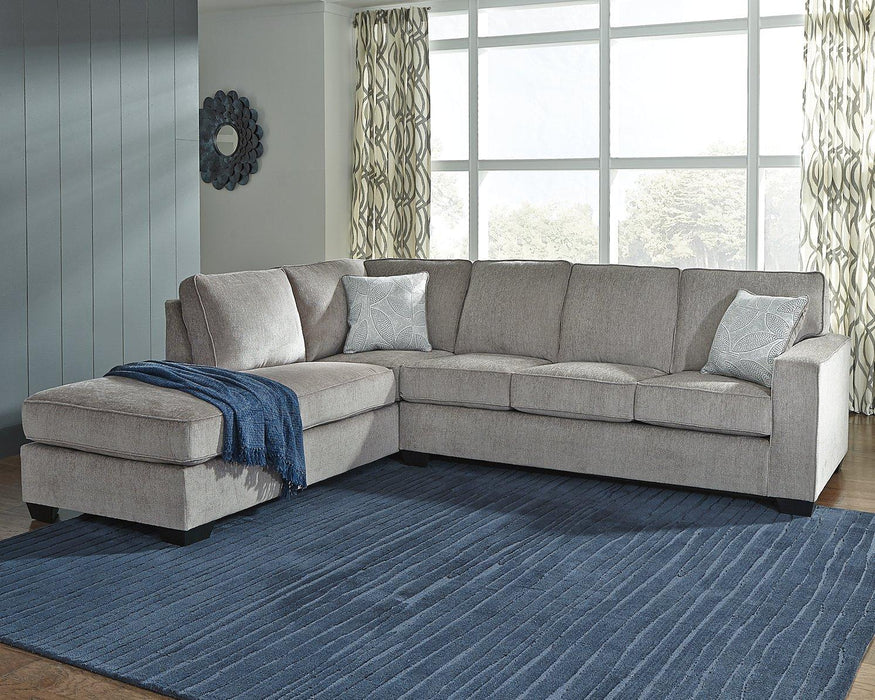
Visual flow describes how the eye moves through a room and directly affects whether a living space feels open or cramped. A large piece of furniture positioned poorly can make even a larger living room feel closed in and heavy.
Several design choices help sectionals support rather than block visual flow:
|
Feature |
How It Improves Visual Flow |
|---|---|
|
Low backs |
Keep sightlines open across the room |
|
Slim arms |
Reduce visual bulk near doorways |
|
Raised legs |
Create visible floor space underneath |
|
Light fabrics |
Reflect natural light, feel less heavy |
|
Clean lines |
Read as intentional, not cluttered |
Choose sectional lengths that leave some wall space visible at each end, roughly 8–18 inches, to avoid a wall-to-wall, cramped appearance. Pair a large sectional with one substantial coffee table rather than many small side tables that fragment the view and create visual noise.
When placing a rug, ensure it extends under the front legs of the sectional to create a balanced and integrated look within the room.
The goal is to keep the eye moving smoothly through the space rather than stopping at a visual barrier.
Sectional sofas can also be customized to fit within any area, optimizing space utilization in both small and large living rooms.
Sectionals in Small and Medium Rooms: Making Tight Spaces Flow
Sectionals can actually improve flow in a small living room when scaled and placed thoughtfully. The key is choosing compact dimensions and positioning the sectional to create one clear, primary route instead of many awkward paths.
Recommended specs for smaller rooms (10’ x 12’ to 12’ x 14’):
-
Overall length: 80–96 inches on the long side
-
Arm width: 4–6 inches (slim profile)
-
Leg height: 5–8 inches (raised for visual lightness)
-
Back height: Under 34 inches
Place the sectional in a corner or float it slightly off a wall to define traffic flow clearly. Positioning a sectional against two walls can optimize space and help define the living area in small or medium rooms. Pair with a small, round coffee table or nesting tables to keep circulation open; sharp corners on rectangular tables become obstacles in tight spaces.
A concrete example: a 2024 city apartment living room where a 3-seat sofa plus chair blocked the balcony door. Replacing them with a corner sectional opened a straight path from the entry to the balcony while actually providing more seating.
Keep accessories minimal in a compact room, one floor lamp, a slim console, and a single large rug, to prevent interrupting the flow you've created.
Sectionals in Large and Open-Plan Spaces: Organizing Multiple Routes
Large homes and open plan spaces can feel chaotic without clear circulation routes. Too much floor space without definition leads to furniture floating randomly and people cutting through the middle of the room.
Some sectionals in large living spaces feature pull-out beds, making them ideal for accommodating overnight guests.
A generously scaled sectional (10–12 feet long) can anchor the main seating areas and encourage traffic to skirt the perimeter rather than crossing through the center. Use a large area rug to define the seating zone, with the sectional fully or mostly on the rug and clear walkways around its edges.
Sample layout for a 22’ x 18’ great room:
-
Position a U-shaped sectional facing the fireplace
-
Leave 3–4 feet of open space behind the back for flow between the kitchen and the hallway
-
Place the ottoman or coffee table centered in the U
-
Keep one side of the U as the primary entry into the conversation area
-
Use the open perimeter for larger rooms to traffic between zones
In big spaces, it's better to create one or two wide, obvious circulation paths than many incidental, confusing routes between scattered furniture.

Choosing Sectional Features That Support Better Flow
Certain sectional features can help or hurt room flow depending on where they're positioned. Consider these elements when selecting the right sectional:
Arms and profiles:
-
Low, narrow arms near doorways reduce visual bulk
-
Wide, rolled arms can block sightlines and make entries feel tight
-
Armless ends provide easier access to the seating area
Chaise placement:
-
Position the chaise lounge away from primary routes
-
Chaise ends work well against walls or in corners
-
Avoid placing chaise where they jut into main walkways
Recliners:
-
Built-in recliners need extra clearance behind and in front
-
Orient reclining seats sideways to traffic paths, not directly into them
-
Allow 18–24 inches behind for full recline clearance
Storage features:
-
Storage chaises work best on the less-trafficked side
-
Lids need room to open without blocking pathways
-
Under-seat compartments should be accessible without moving the coffee table
Durable materials and construction:
-
Higher legs with visible space underneath keep visual flow open
-
Sturdy frames made from durable materials maintain shape over time
-
Quality construction prevents sagging that can narrow walkways
Measuring and Planning for Flow Before You Buy
Careful measuring in today's often compact condos and apartments is essential to protect walkways and clear sightlines. A sectional that looks perfect in a showroom can destroy flow in your actual living room if you haven't done the math.
Step-by-step measuring process:
-
Measure room length and width at floor level
-
Mark door swings, windows, radiators, and vents on a sketch
-
Note permanent built-ins (entertainment center, shelves, fireplace) with exact dimensions
-
Record ceiling height if considering tall-back sectionals
-
Identify the room's focal point and primary entry points
Before purchasing, map out the sectional footprint with painter's tape or newspaper on the floor. Leave a minimum of 30–36 inches where you intend primary routes. Walk the taped outline several times, entering from different doors and approaching from different angles.
Check product dimensions carefully:
-
Chaise depth (often deeper than standard seats)
-
Back height (can block low windows)
-
Arm thickness (affects doorway clearance)
-
Overall footprint, including any angled corners
Create a simple top-down sketch showing the proposed sectional, main traffic lines, and distances. This confirms whetherthe flow makes sense before you commit to a large piece of furniture.
Common Flow Mistakes with Sectionals (and Easy Fixes)
Even good sectional couches are often placed poorly, hurting traffic flow instead of helping it. Here are the most frequent mistakes and how to fix them:
Mistake 1: Pushing every side against the walls. When sectionals line walls completely, they disconnect the middle of the room and create a cavernous feeling. The space feels larger but less organized.
Fix: Float the sectional 8–12 inches off the wall to create a perimeter path. This single adjustment can transform how the room functions.
Mistake 2: Blocking doorways with the chaise. A chaise positioned near a doorway forces people to squeeze past extended legs every time they enter or exit.
Fix: Swap the chaise to the opposite side or choose a reversible chaise sectional. Many manufacturers offer left-hand and right-hand configurations; measure before ordering.
Mistake 3: Placing recliner seats into the main path. Recliners that extend into primary walkways create obstacles and force awkward detours during movie nights.
Fix: Rotate the sectional so reclining seats face sideways to traffic, or position them in corners where extension won't block routes.
Mistake 4: Choosing too large a sectional for the room. A sectional that consumes too much space leaves narrow, uncomfortable passages and makes the room feel cramped despite comfortable seating.
Fix: Remove one modular piece or swap to a smaller configuration. Sometimes, a smart choice is acknowledging that the space needs a smaller sectional.
Mistake 5: Ignoring the second exit. Rooms often have two ways in and out (front door and kitchen, entry and balcony). Focusing only on one creates dead ends.
Fix: Ensure both primary routes maintain 30+ inch clearance. Walk the room after arranging, checking movement from every door to every destination.
After any rearrangement, walk the room from every entry point. If you can move from door to seating and from seating to other zones without tight spots, your flow works.
Maintenance and Longevity: Keeping Your Sectional Flowing for Years
A sectional sofa is more than just a place to sit; it's the anchor of your living room space and a key player in how your room feels and functions. To keep your sectional looking great and supporting smooth room flow for years, a little regular maintenance goes a long way.
Start by vacuuming your sectional weekly, paying special attention to crevices and seams where dust and crumbs can collect. For fabric sectionals, spot-clean spills right away with a gentle upholstery cleaner to prevent stains from setting in. If your shaped sectional has removable cushion covers, wash them according to the manufacturer's instructions to keep colors fresh and fabrics soft.
For L-shaped sectionals with wood or metal legs, wipe them down with a damp cloth to remove dust and protect the finish. If your sofa features leather or faux leather, use a conditioner every few months to prevent cracking and maintain a supple feel.
In a small living room, keeping the area around your L-shaped sectional clutter-free is especially important. Regularly clear away magazines, toys, and other items that can accumulate on or around the sofa. This not only keeps your living room looking tidy but also preserves the open, inviting flow that makes the space feel larger.
Rotate and fluff cushions every couple of weeks to ensure even wear and maintain the sectional's shape. If your sectional is modular, occasionally rearrange the pieces to distribute use and prevent sagging in high-traffic spots.
By making these simple habits part of your routine, your sectional will continue to enhance your living room's comfort, style, and flow, no matter the size of your space. A well-cared-for sectional sofa isn't just a smart choice for today; it's an investment in a living room that feels welcoming and organized for years to come.
Conclusion: Let the Sectional Lead Your Room's Flow
A well-placed sectional doesn't just fill a room; it organizes how you live in it. When chosen and positioned thoughtfully, sectionals create clear walkways, defined zones, better sightlines, and fewer obstacles than scattered seating options.
The continuous shape of a sectional guides traffic naturally around the seating zone rather than through it. This single piece of furniture can anchor a living area, divide open spaces without blocking light, and provide enough space for everyday relaxing and family gatherings alike. The result is a room that feels intuitive to move through and inviting to sit in.
See your sectional not as a large sofa that happens to fit in a corner, but as the organizing shape that determines how everyone enters, crosses, and relaxes in your space. Measure the room, sketch a layout, tape out a footprint, and plan placement around your focal points and main paths before purchasing. A few hours of planning can transform how your living room functions for years to come.
Discover Outdoor Furniture at J. Patrick's Furniture

Turn your outdoor space into a comfortable place to relax and gather. J. Patrick's Furniture offers outdoor furniture designed for durability, comfort, and everyday use. Whether you're looking for casual seating or a complete outdoor dining setup, our collection includes options that work well in a variety of outdoor spaces.
Browse our outdoor furniture selection and choose pieces that fit your lifestyle and layout. With the right furniture, your patio, deck, or backyard can become an inviting extension of your home.